We're an independent Ukrainian consortium RIDNE
— that grows, makes and delivers humanitarian food itself.

We're an operator – not a charity
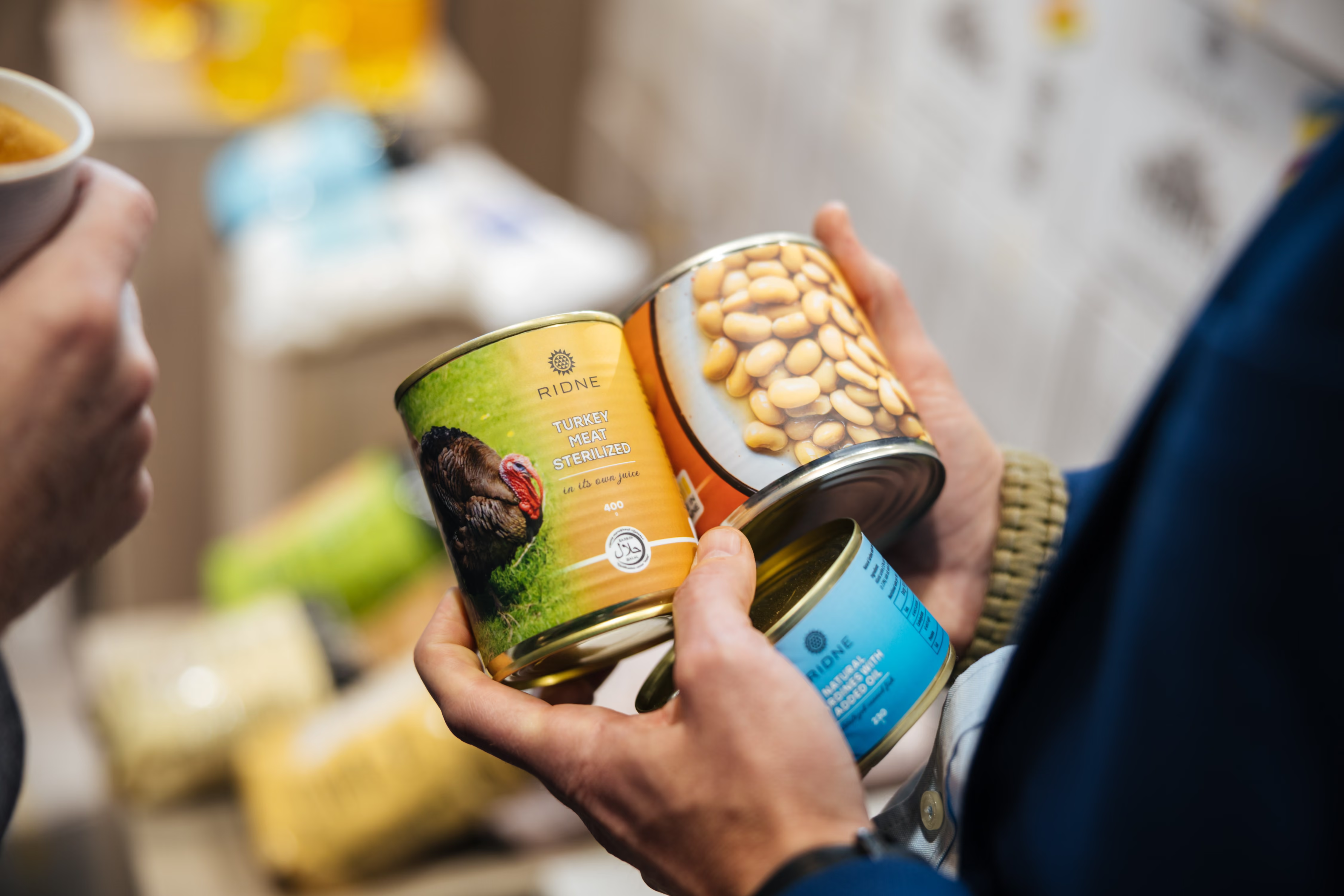
We grow, make and deliver the food ourselves, funded by humanitarian programmes; the goal is food security delivered, not goodwill performed.
We're building a model – not a stopgap
A united consortium meant to outlast the war: jobs for farmers, modernised production, and a standard high enough to be a model for Ukrainian agriculture.
We hold a standard – not a slogan
Quality, speed and flexibility on Ukrainian-made food, held to a sustainability standard and reviewed by an outside partner – and we only work with partners who hold the same line.
Basic principles of sustainable development of RIDNE
Responsibility is built into the way every food program is run
Ridne’s responsibility is not a separate charity layer.
It sits inside the operating model: who works in the factories, where the budget is spent, what stays in the community, and how the whole system is measured over time.

An international board keeps us to global standards
World-class humanitarian, development and policy leaders who connect Ukrainian production to global aid chains and keep us accountable to them.
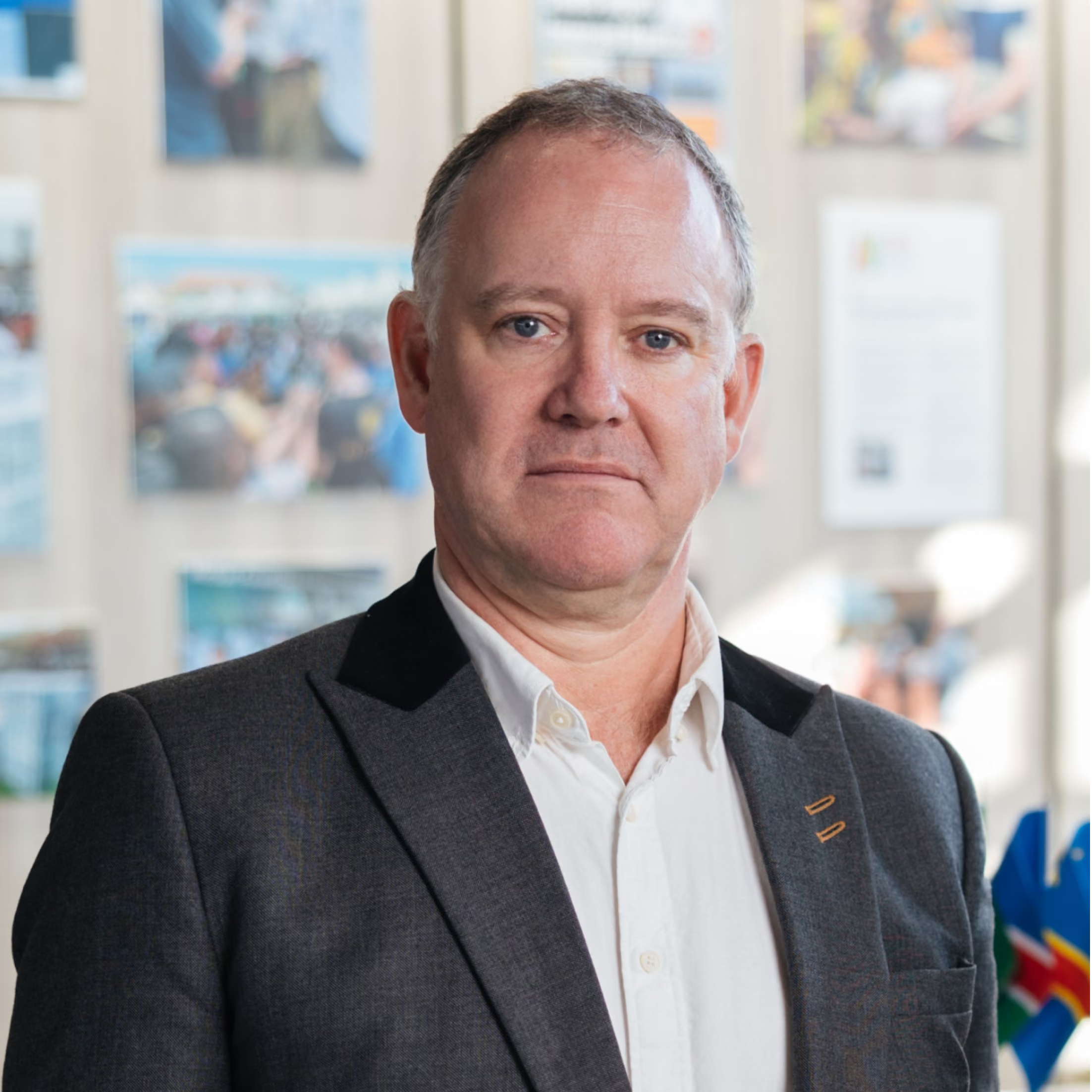
Co-founder of FuturePlus; Former CEO of UNICEF UK
Mike Penrose is a preeminent figure in the global humanitarian sector, having managed some of the world’s largest aid budgets. His career includes serving as the CEO of UNICEF UK, CEO of Action Against Hunger, and Global Humanitarian Director at Save the Children. He has also served as a specialized advisor to the UK Government on conflict and humanitarian crises.
Role at RIDNE: Mike bridges the gap between Ukrainian manufacturing and global institutional requirements. He oversees the strategic development of humanitarian hubs and ensures RIDNE operates as a world-class “operating system” for food security.
Mike Penrose
Chairman of the International Advisory Board
Mike Penrose is a preeminent figure in the global humanitarian sector, having managed some of the world’s largest aid budgets.
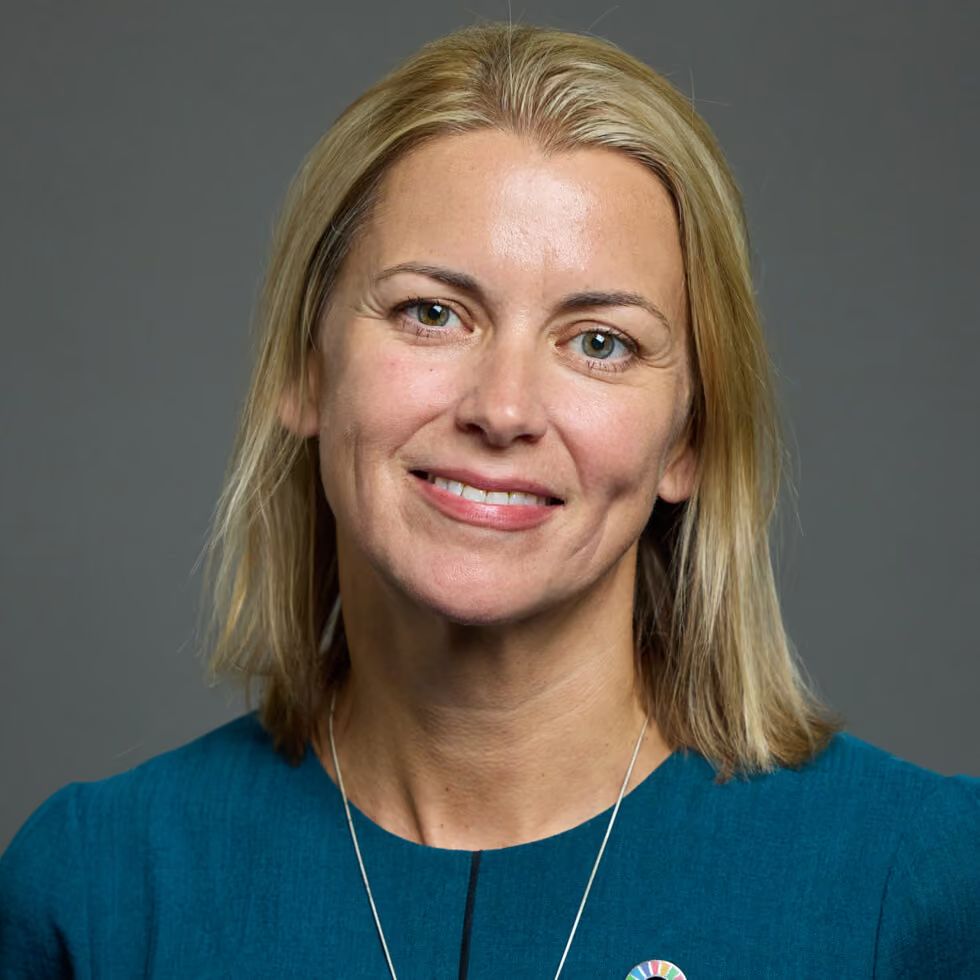
Liz Sugg is a member of the UK House of Lords and an experienced leader in international development and humanitarian policy. She previously served as Minister for Sustainable Development and Africa at the UK’s Foreign, Commonwealth & Development Office, where she oversaw major development programmes across Africa and championed gender equality, education, and humanitarian response.
Prior to her ministerial role, Baroness Sugg served as Head of Operations at 10 Downing Street and played a key role in coordinating government priorities. She remains actively engaged in development, climate, and gender issues in Parliament, contributing to policy discussions on global health, girls’ education, and the empowerment of women and marginalised communities.
Baroness Liz Sugg, CBE
Member of the UK House of Lords
Liz Sugg is a member of the UK House of Lords and an experienced leader in international development and humanitarian policy.
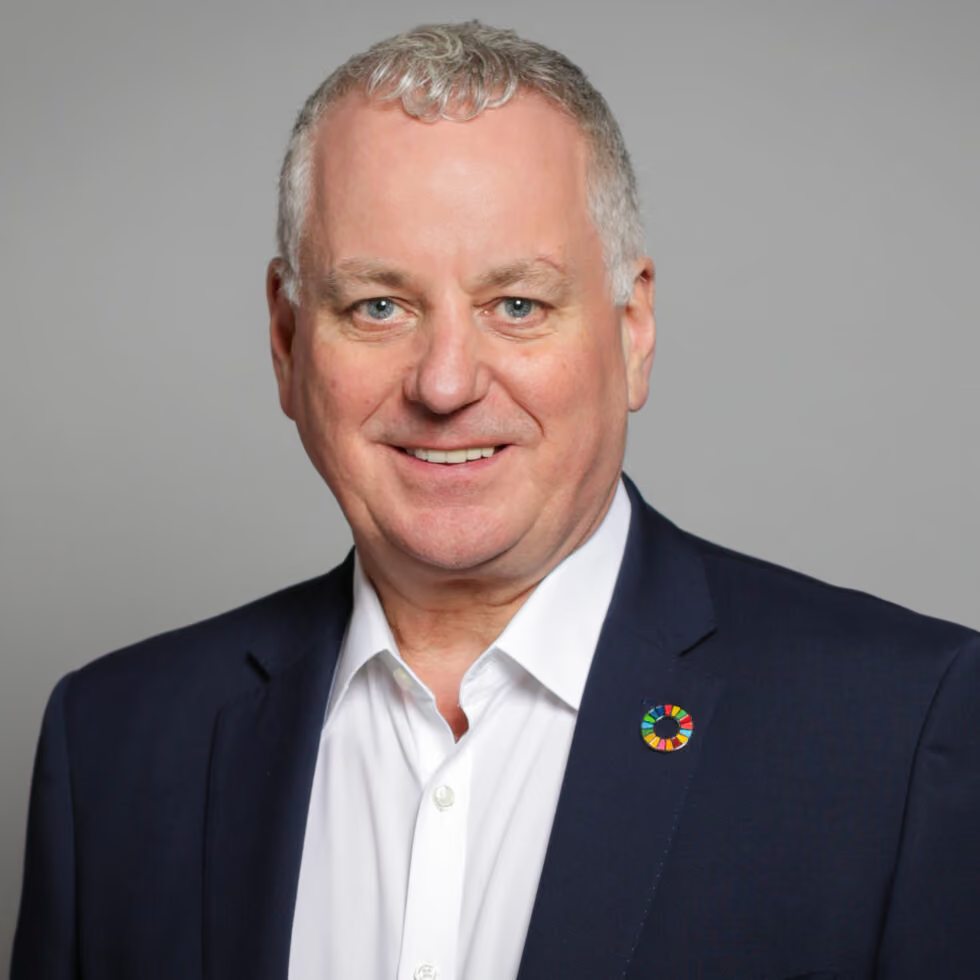
Jack McConnell is a senior British politician and member of the House of Lords, with a distinguished career in public service and international development. He served as First Minister of Scotland from 2001 to 2007, where he led a programme of domestic reform alongside a strong commitment to global citizenship and international engagement.
Since entering the House of Lords, Lord McConnell has focused extensively on international development, education, and human rights. He is the founder of the All-Party Parliamentary Group on Global Education and has been a leading advocate for access to education in low-income countries. He has also worked with a range of international NGOs and multilateral organisations, supporting initiatives across Africa and Asia. His work continues to centre on inclusive development, governance, and expanding opportunities for young people worldwide.
Lord Jack McConnell
Member of the House of Lords; former First Minister of Scotland
Jack McConnell is a senior British politician and member of the House of Lords, with a distinguished career in public service and international development.

David Abrahamovitch is a British entrepreneur and the founder and Chief Executive Officer of Grind, a leading UK coffee brand known for its premium offering and strong sustainability focus. He established Grind in London in 2011, transforming it from a single café into a widely recognised hospitality and retail brand, with locations across the capital and a fast-growing direct-to-consumer business.
Under his leadership, Grind has become known for innovation in both customer experience and environmental responsibility, including the development of compostable coffee pods and a broader commitment to reducing single-use plastics. David’s entrepreneurial approach combines brand-building with a focus on sustainability and modern consumer trends, positioning Grind as one of the UK’s most distinctive coffee companies.
David Abrahamovitch
British entrepreneur
David Abrahamovitch is a British entrepreneur and the founder and Chief Executive Officer of Grind, a leading UK coffee brand known for its premium offering and strong sustainability focus.

Stéphanie Rivoal is a senior French diplomat with extensive experience in international relations and multilateral diplomacy. She served as France’s Ambassador to Uganda, where she worked to strengthen bilateral relations, promote economic cooperation, and support development initiatives in East Africa.
She has also held prominent roles within the French Ministry for Europe and Foreign Affairs, including serving as Secretary-General of the Generation Equality Forum, a major global gathering convened by UN Women to advance gender equality. Stéphanie’s career reflects a strong commitment to international cooperation, gender equality, and sustainable development, with a particular focus on Africa and multilateral engagement.
Stéphanie Rivoal
Senior French diplomat
Stéphanie Rivoal is a senior French diplomat with extensive experience in international relations and multilateral diplomacy.

Nimco Ali is a prominent human rights activist and the founder of The Five Foundation, a global organisation dedicated to ending female genital mutilation (FGM). A survivor of FGM herself, Nimco has become one of the most influential voices advocating for the rights and protection of women and girls worldwide.
Through The Five Foundation, she works with grassroots organisations, governments, and international partners to accelerate the eradication of FGM by 2030. Nimco has advised governments and institutions on policy and legislative reform and has played a key role in raising global awareness of gender-based violence. Her work is widely recognised for its impact, combining advocacy, policy influence, and community-led change.
Nimco Ali, OBE
Human-rights activist
Nimco Ali is a prominent human rights activist and the founder of The Five Foundation, a global organisation dedicated to ending female genital mutilation (FGM).
The operators who built it run it
Real people, named and reachable – production, programmes and partnerships each have someone accountable for them.
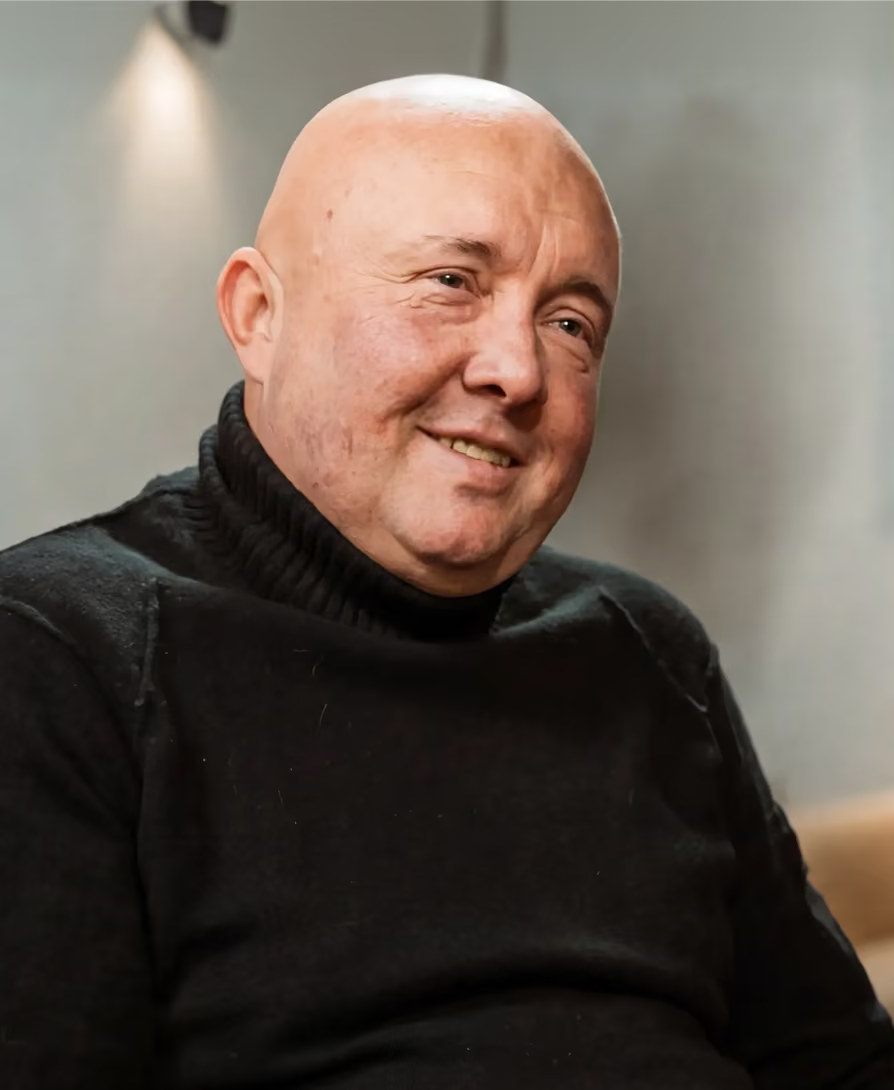
Oleksii Khvorostianyi
Director
Chief Executive Officer of the RIDNE Food Consortium, leading the network of Ukrainian farms and food plants that turns donor programmes into humanitarian food at scale.
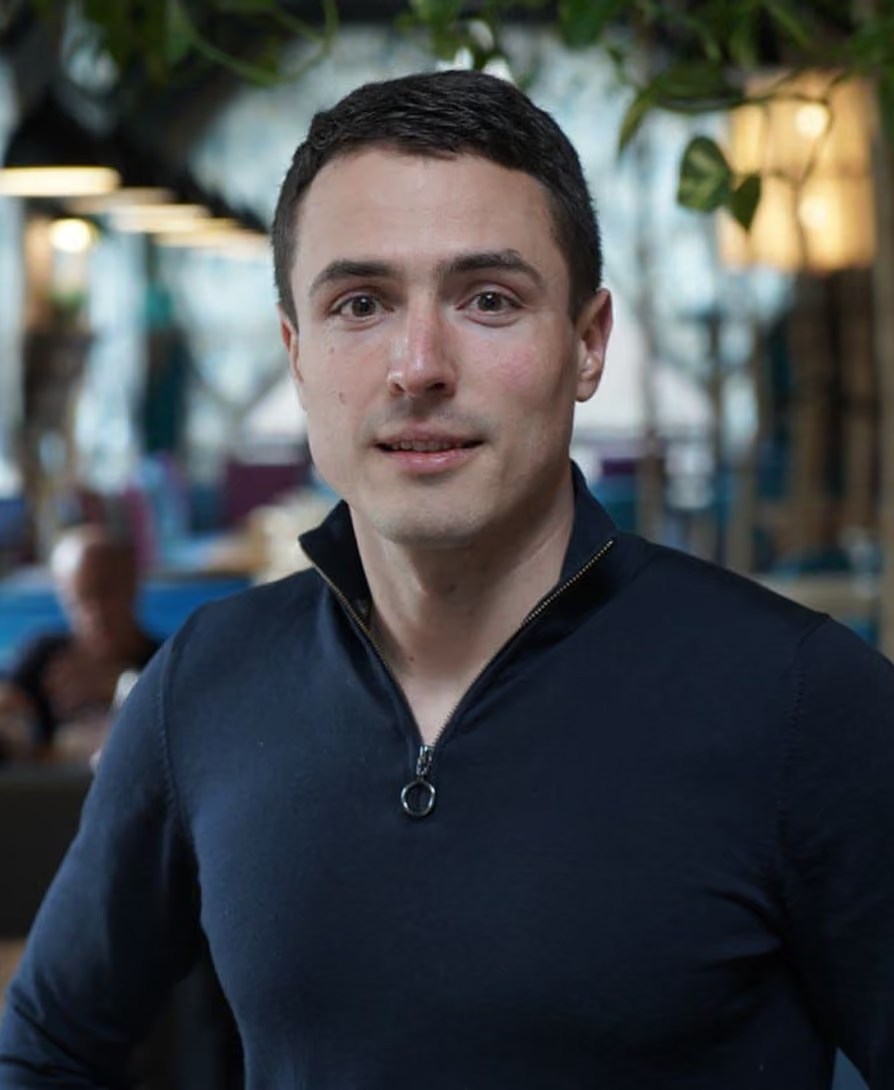
Serhiy Kovalchuk
Commercial Director
Commercial Director of the RIDNE Food Consortium, driving its shift from aid dependence toward self-sufficient production and its sustainability partnership with FuturePlus.
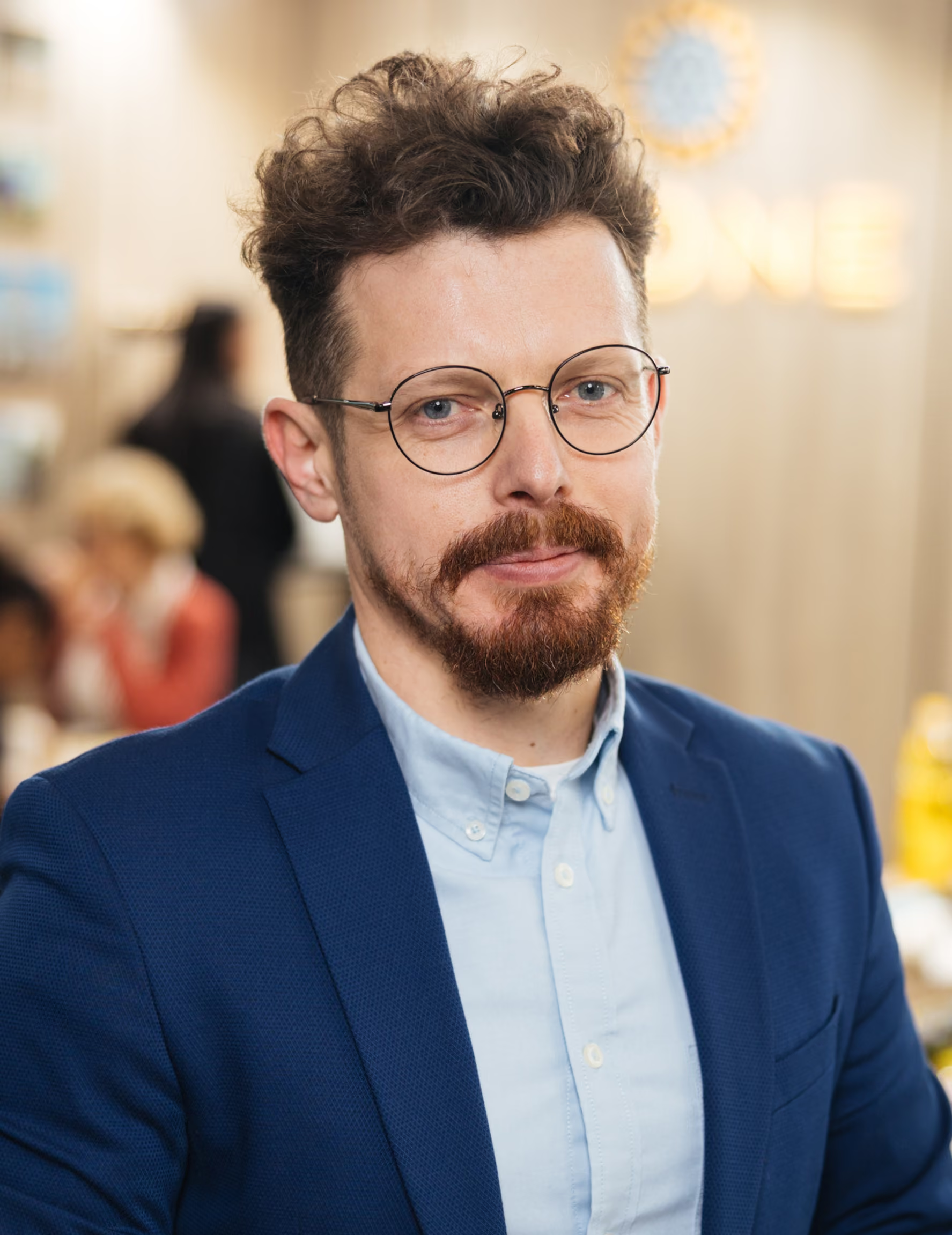
Kostyantyn Romanets
Operations Director
Operations Director of the RIDNE Food Consortium, overseeing production and delivery across its farms, plants and distribution network.
We didn't start a charity when the invasion began
– we turned a working production business into a humanitarian operator in weeks.
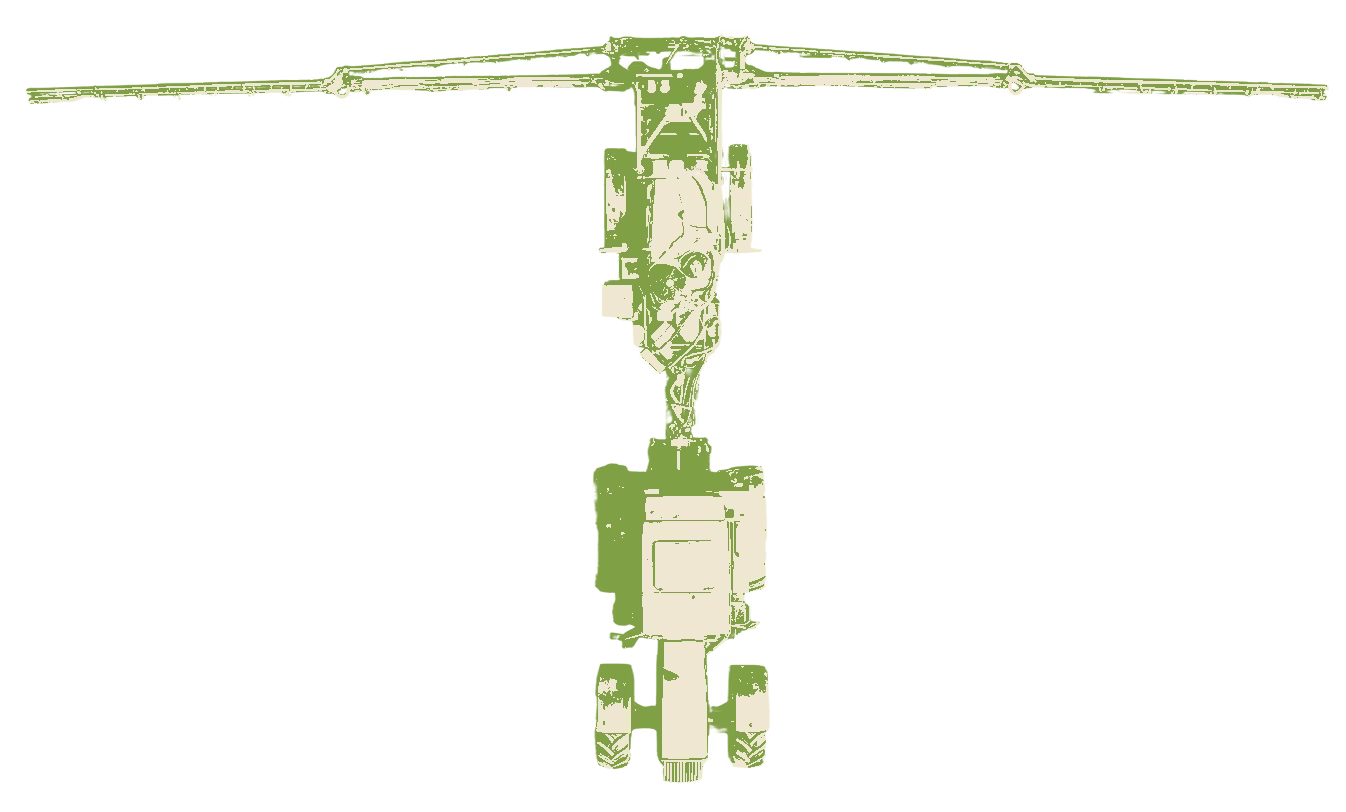
Before the war, our founding team supplied Ukrainian farmers with fertilisers.
.png)
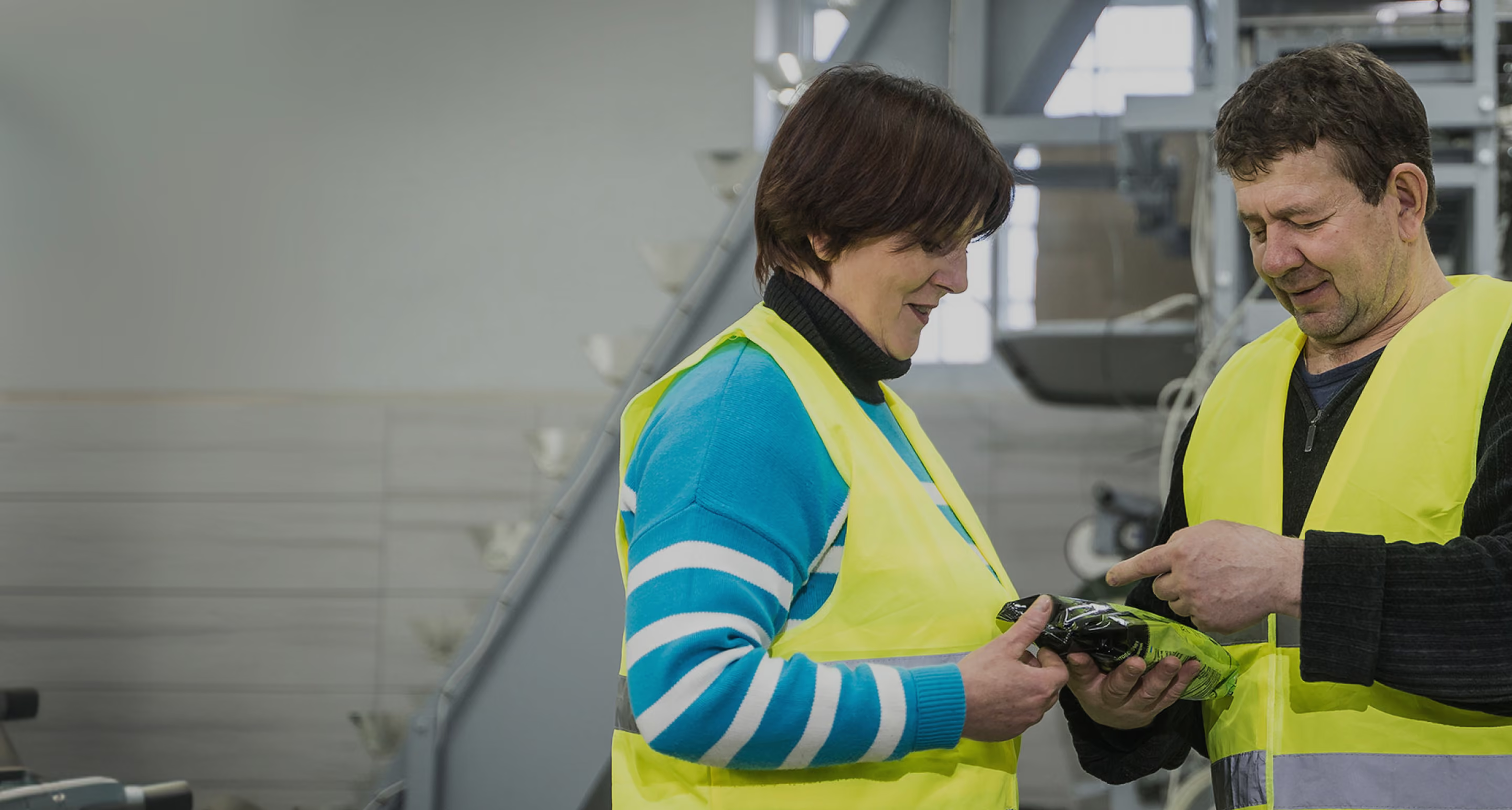
When the full-scale invasion hit, they bartered inputs for grain, re-commissioned an idle mill and oil-press, and shipped the first food kits – flour, pasta and oil – within weeks.
We're a Ukrainian production operator that humanitarian programmes can build on, in Ukraine and beyond.
Built in a week, scaled in four years, here to stay.
%201.avif)